FP&Ai Podcast: Ep 5 : Finance as a True Business Partner – Beyond the Numbers
Finance has always been about the numbers — but what if that is no longer enough?
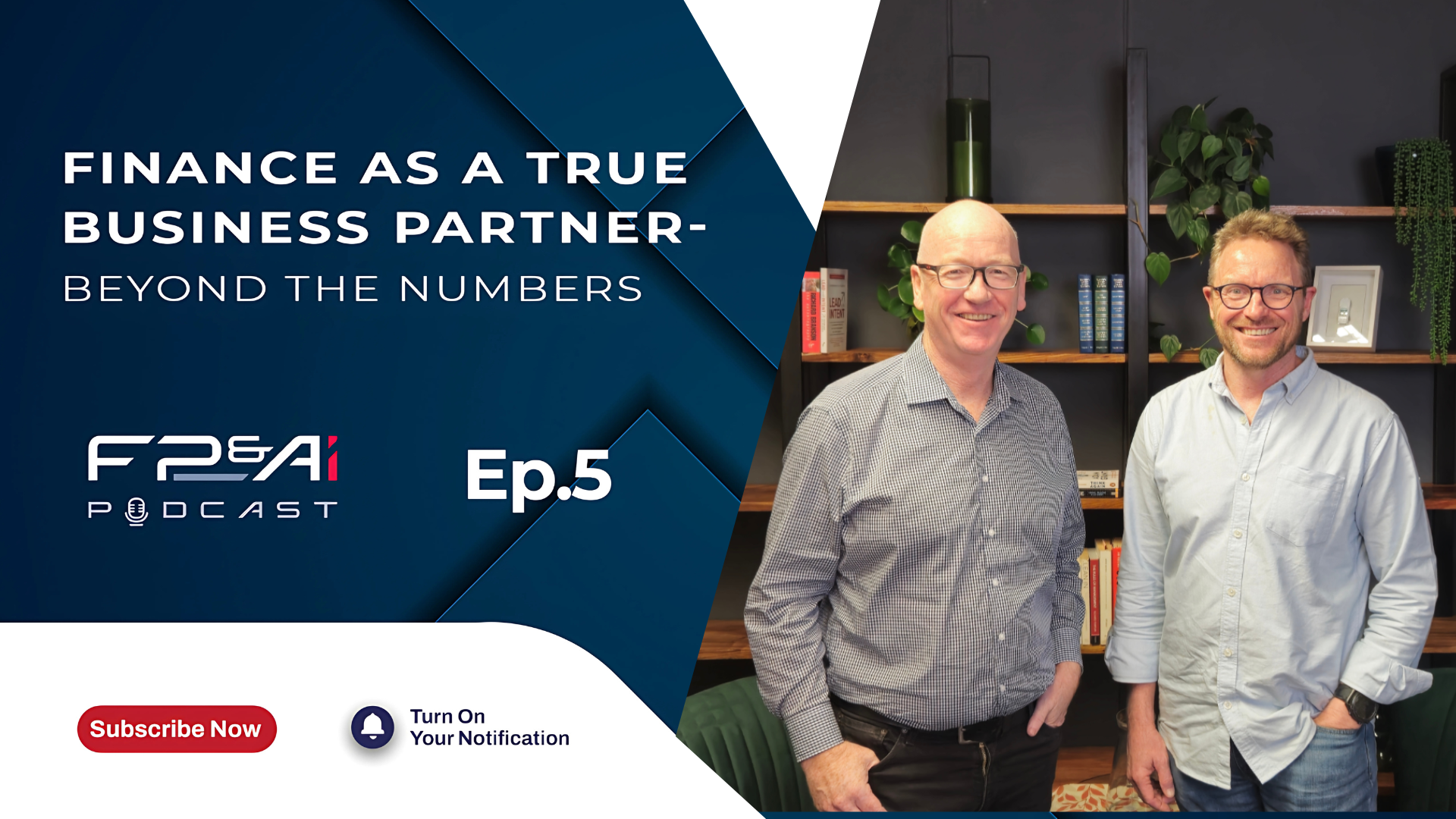
In this episode of the FP&Ai Podcast, Finance as a True Business Partner – Beyond the Numbers, I sit down with leadership coach Andrew Brown to unpack why finance must move past reporting the past and step into shaping the future.
We explore:
- Why finance professionals need to be more than the “spreadsheet people”
- The power of storytelling and visuals in bringing numbers to life
- How leadership and change management influence strategy
- Practical ways finance can drive growth, not just record it
If you are ready to shift from being the quiet voice in the room to becoming a true business partner, this episode is for you.
Subscribe for more conversations at the intersection of finance and strategy.
[0:04]
Roger Knocker introduces the FP&A podcast and explains that he recently recorded an in-depth conversation with leadership coach Andrew Brown, someone he has worked with and trusted for over 20 years.
[0:59]
Roger outlines Andrew’s background: BCom, MBA, experience at Accenture, manufacturing, and tech companies. He highlights Andrew’s sharp, unfiltered lens on leadership and strategy.
[1:11]
Roger frames the discussion as
“Finance as a true business partner – going beyond the numbers,” focusing on why finance must evolve beyond bookkeeping and historical reporting.
[2:17]
Andrew explains leadership coaching: helping individuals and teams develop leadership skills, improve alignment, think clearly, and gain new perspectives. He describes himself as a sounding board and thinking partner.
[3:35]
Andrew says leaders often can’t see the bigger picture because they're immersed in daily operations. His role is to pull teams out of the “noise” to regain perspective, focus, and prioritization.
[5:08]
Andrew explains the value of combining strategy, organizational capability (skills, structure, tech), and change management—emphasizing leadership’s role in clearly communicating direction and motivating teams.
[7:00]
Andrew describes how culture is reflected in how people feel on Sunday night about Monday morning. He works to help teams feel energized and aligned rather than anxious or disengaged.
[8:44]
Andrew gives an example from a large bank: when the team identified public recognition from the CEO as a key motivational driver, the room’s energy shifted. The goal became not just hitting KPIs but gaining visibility and acknowledgement.
[10:58]
Andrew argues recognition is a stronger motivator than financial rewards. Rewards become transactional; recognition creates genuine job satisfaction.
[12:21]
Roger asks how finance typically shows up in strategy sessions (boss barats). He notes finance often opens with last year’s numbers, but afterward becomes quiet as sales and operations take over.
[13:53]
Andrew says finance usually reports on past performance, explains what can’t be done, and then becomes less involved in growth discussions. He rarely sees finance modeling future opportunities or proactively enabling growth.
[14:46]
Andrew critiques financial communication: Excel sheets are often overwhelming, unclear, and poorly translated for non-financial executives.
[18:03]
Roger and Andrew discuss what good finance communication looks like: explaining key variances, highlighting big-ticket items, simplifying data, and guiding the audience from summary to detail.
[20:08]
Roger suggests using ragging (red/amber/green) and waterfall charts to show the size and impact of variances visually. Andrew agrees—simple visuals dramatically improve clarity.
[21:08]
Andrew emphasizes the importance of graphical communication; pictures convey meaning faster than bullet points. Finance professionals who present visually stand out.
[21:37]
Roger recalls an accountant who used clear visuals—like waterfall charts and “worm reports”—to communicate finances effectively at a church, dramatically increasing understanding and engagement.