Why this matters
Finance is expected to do more, with the same team
Boards want faster insight, markets shift constantly, and compliance keeps growing. Most finance teams still run core work on spreadsheets and manual checks. AI can close that gap, but only with a clear plan behind it. Used in scattered, reactive ways, it creates more risk than value.

Yes, when the tools are built for finance and governed properly. That means clear ownership of data and access, outputs you can trace back to source rather than black boxes, and human review of every exception. The right platform keeps your data private and isolated, and never uses it to train public models.
Autonomous finance does not remove judgement. It frees your team to focus on it.
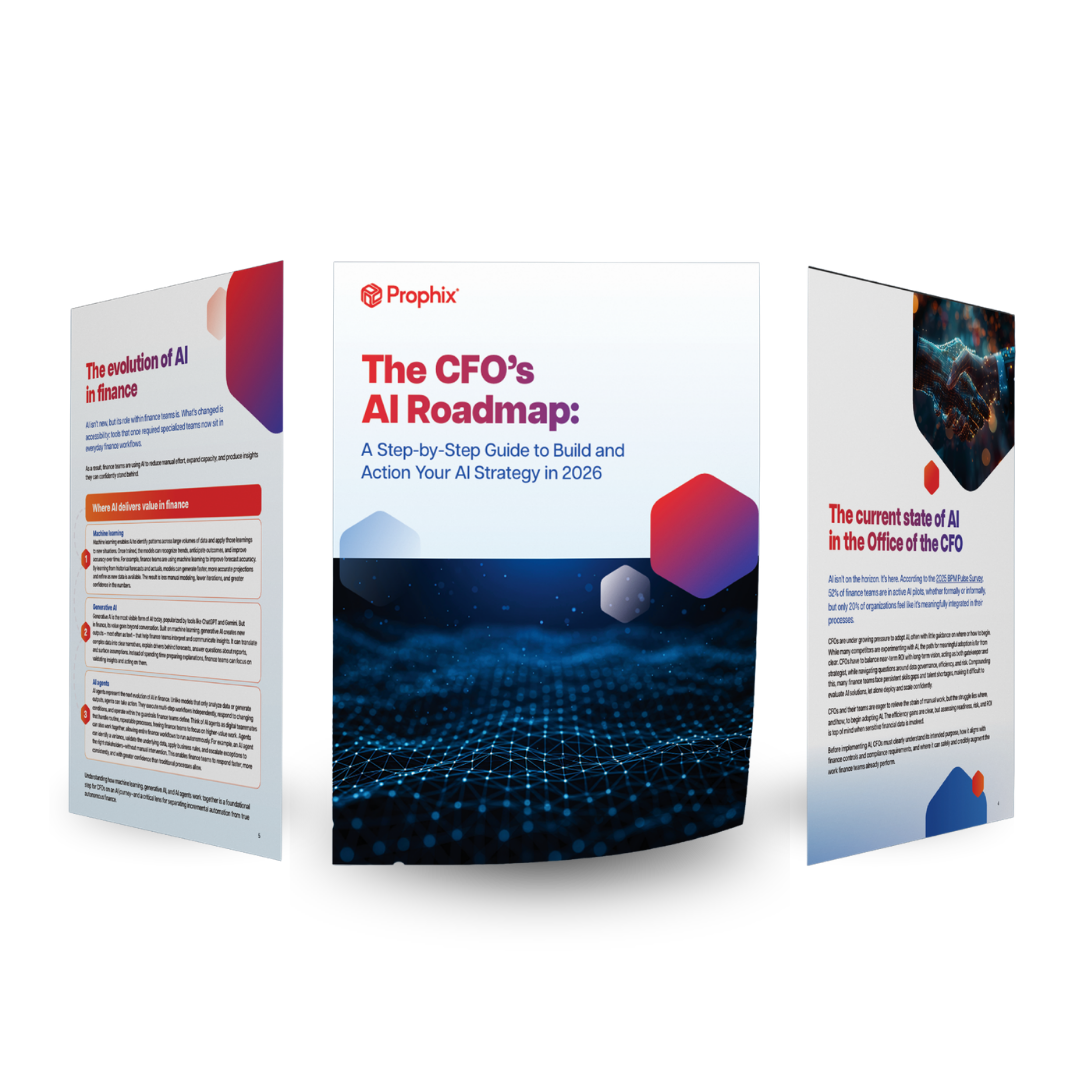
What's inside the guide
A practical way to plan AI adoption in finance. Inside you'll find:
A maturity model to find your starting point, from spreadsheet-driven to autonomous
Where AI delivers value, and the benefits to expect
The governance and data questions to settle first
A three-step roadmap you can action

Common questions (FAQ)
Is AI safe to use for core finance processes?
Yes, with finance-grade tools and clear governance: explainable outputs, isolated data, and human review of exceptions.
Will AI replace finance teams?
No. AI takes on repeatable execution. Judgement, accountability, and strategy stay with your team.
Where should we start?
Assess your maturity first, then pilot AI in a contained, finance-owned use case like forecasting or reporting.
Do we need clean data first?
Yes. AI amplifies the data it is given, so consistent, governed data comes first.