
Part 3 of 4 - How to Build a High-Impact Finance Team
Roger Knocker • February 20, 2026
Part 3 of 4
██████░░

Let’s be clear.
This isn’t about turning Finance into a glorified accounts team.
We’ve got software for that.
This is about building a Finance function that adds commercial value every single day.
1. Know the Business. Deeply.
High-impact finance teams don’t just know their systems.
They know our systems.
They know what every button in Ops means.
They understand the workflows that generate the numbers they report.
They don’t just follow processes - they investigate them.
They go deep.
Into operations.
Into commercials.
Into every process that impacts financial outcomes.
2. Still Close Month-End - But That’s Just the Start
Yes, close the books.
Yes, get the debits and credits right.
Yes, stay compliant.
But don’t stop there.
That’s the minimum.
If your only job is to finish month-end on time, you’re not doing finance.
You’re doing admin.
3. Be Useful Before the Problem Hits
The best Finance people are problem-solvers.
They helped me comb through detailed contracts and insurance policies when no one else would.
They took the tedious and made it clear.
That’s what high-impact looks like.
They also set up systems for operations that control and track financial information - especially margins.
That’s next-level value.
4. Challenge the Margins. Constantly.
Review margins.
Relentlessly.
Ask:
Why aren’t we on plan?
Where did the assumptions break?
What’s the impact?
And most importantly, how do we fix it?
Not from a technical point of view.
From a commercial one.
5. Don’t Report. Translate
Can you reconcile the plan to actuals?
Good.
But can you explain:
What went wrong?
Why it went wrong?
How each category performed?
And what we can do next?
Start by playing back the assumptions.
Then walk us through how those assumptions actually played out.
That’s the difference between reporting and leading.
6. Sit With Ops
Literally.
Sit with them.
Analyse data together.
Document findings.
Reforecast side-by-side.
Figure out how we get back on track - together.
That’s the partnership.
7. Cut the Compliance Fat
Compliance is non-negotiable.
But it must be quick.
Accurate.
Automated.
And if you need to, outsource it.
But only to partners who do the actual work.
Not the ones who give you all the homework and then charge you to type it into the system.
Free up your team’s time to focus on value.
8. Speak Plainly. Visualise Brilliantly.
No one wants a finance person who hides behind jargon.
Tell us what the data says.
In English.
Be the best storytellers and visualisers of financial data.
Make it obvious.
Make it land.
Make it change something.
9. Measure What Matters
Track things that drive impact:
- Days to complete month-end
- % of action plans delivered on time
- R-value of operational opportunities realised, not just identified
- Number of finance insights delivered per project per week
If it doesn’t help the business win, don’t measure it.
10. Know Your Worth
Finance isn’t billable.
But every day you save on month-end?
That’s R100k of value unlocked by fixing what’s broken.
Optimising the process.
Protecting the margin.
That’s your ROI.
11. Hire for Grit, Not Just Credentials
You want deadline-driven, entrepreneurial thinkers.
People who talk about margin and profit without being asked.
People who spot the problem and give three solution options as a starting point.
And they don’t stop there.
They facilitate engaging workshops with the business to extract even more value.
These are consulting skills.
And they’re non-negotiable.
12. Train for Business, Not Just Finance
Hire problem-solvers.
Train them in your business model - not just IFRS.
Give them automation tools.
Analytics tools.
And AI.
But here’s the line in the sand:
We don’t want tool jockeys.
We don’t want coders who hide in a script all day.
That destroys value.
We want Finance to be fluent in process.
In workflow.
In data.
In business logic.
They must be advanced digital users, but not techies.
Their job is to:
- Articulate what’s required
- Delegate the tech
- Test ferociously
- Try to break what the tech team says is “done”
- Never settle for undocumented systems
If it’s not documented, it’s not done.
Finance is not a spectator in system design.
They are the owners of accuracy and defenders of clarity.
Because high-impact Finance isn’t a role.
It’s a mindset.
And once you’ve seen what’s possible?
You’ll never settle for month-end mediocrity again.
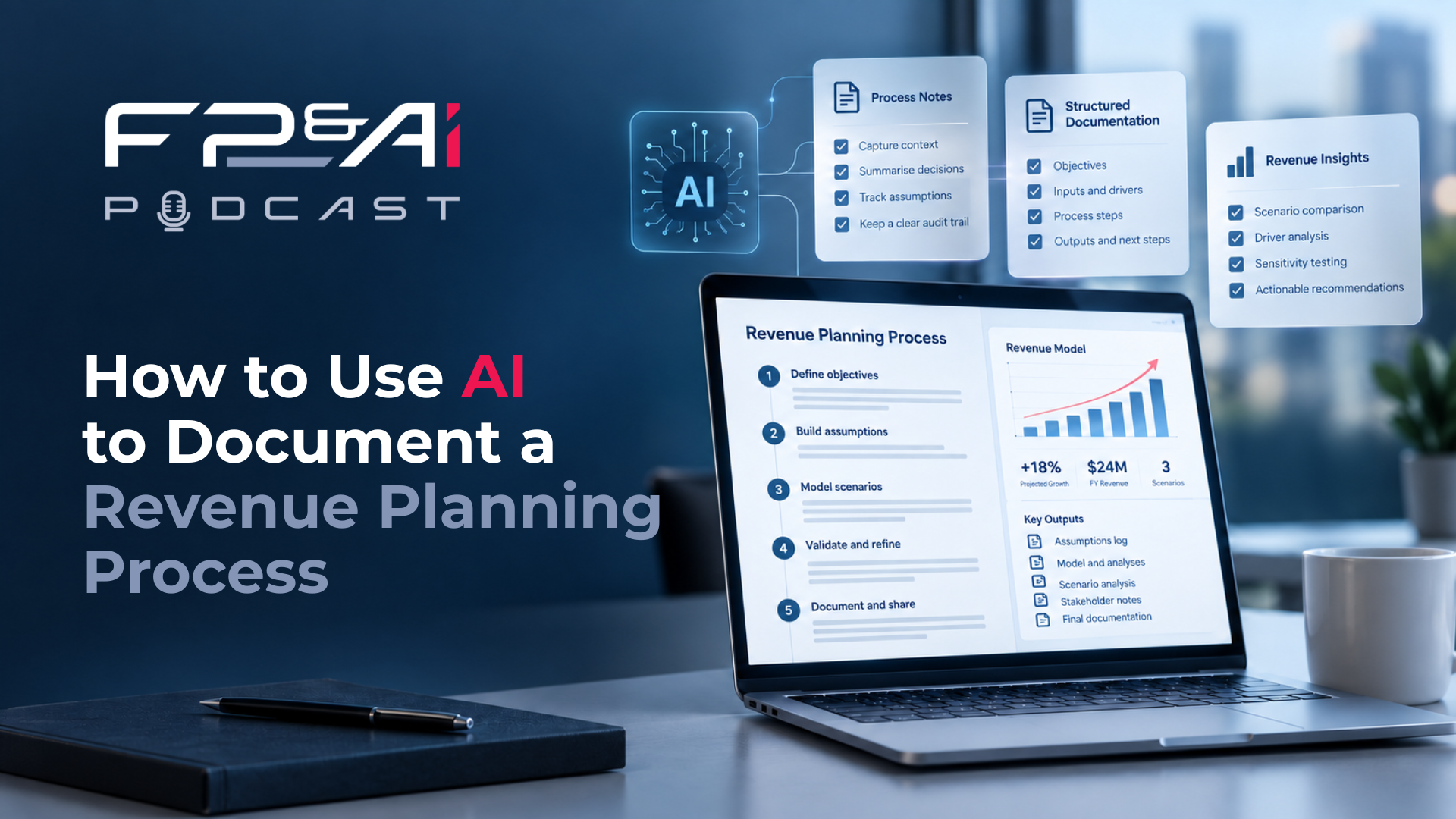
Learn how AI can help finance teams document a revenue planning process, define dimensions and KPIs, and create a stronger foundation for model design.
Learn how AI can turn meetings, documents and manual input into structured revenue planning process documentation, creating a stronger foundation for model design and implementation.