FP&Ai Podcast: Ep 9: The Core of EPM Strategy ft. Yaseen Enos
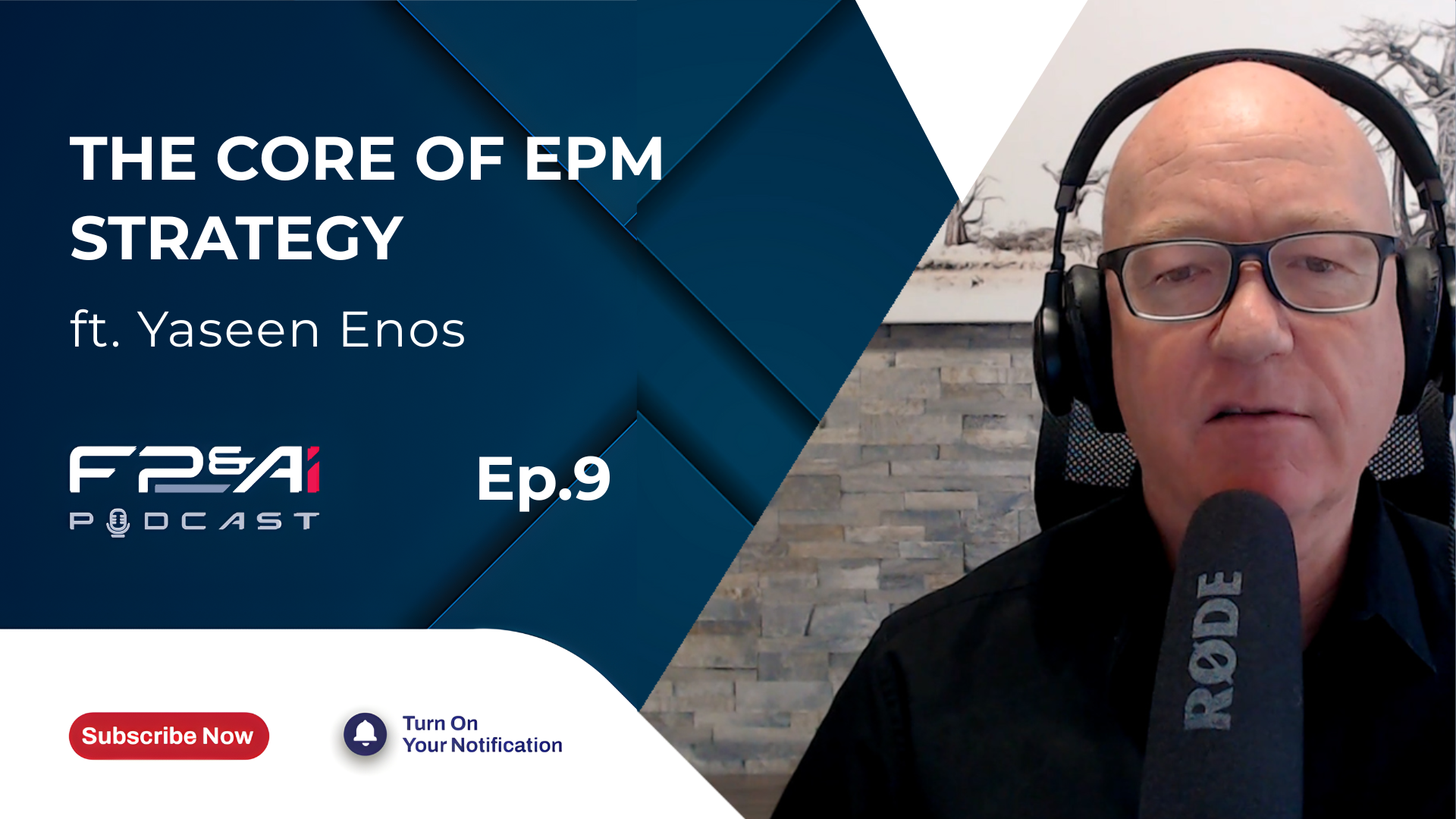
This podcast episode features host Roger Knocker in conversation with Yaseen Enos, a Chartered Accountant, focusing on the strategic implementation and role of Enterprise Performance Management (EPM) within modern finance departments.
[0:33-2:21] Project-Based Workflows: Yaseen Enos explains that his daily professional life is primarily project-driven. Rather than focusing on maintenance, he aims to automate processes and systems, prioritizing high-value, innovative problem-solving that aligns with broader business goals identified by the CFO and senior leadership.
[2:21-4:50] Practical Automation: The pair discusses a real-world example involving the automation of transaction data posting into the general ledger. By removing manual intervention, the goal is to improve accuracy and ensure that financial records remain perfectly synced with source systems.
[6:47-11:20] Understanding Business Needs: Enos emphasizes the importance of spending time upfront to identify the 'true' underlying problem rather than simply executing a requested solution. He notes that users often suggest a specific tool as a solution, but deeper analysis is required to ensure the project actually addresses the correct business challenge.
[12:01-13:16] The Mandate to Push Back: Enos highlights that he is empowered by an executive mandate to push back on projects that do not provide significant value or fail to meet the actual business needs, allowing him to better manage his team's workload.
[14:06-16:41] The Case for EPM Tools: The discussion shifts to why companies eventually move away from spreadsheets like Excel and PowerBI. Enos suggests using a 'financial maturity model' to assess when a business has outgrown manual reporting; if a company struggles to deliver timely, accurate forecasts despite adding more staff, it is time to transition to an EPM solution.
[19:16-21:38] Efficiency and Future-Proofing: They conclude that while Excel is a powerful tool, it becomes a bottleneck as business complexity and data volume grow. Implementing an EPM system is framed as an essential step for businesses looking to move beyond simple reporting toward agile, data-driven decision-making.