
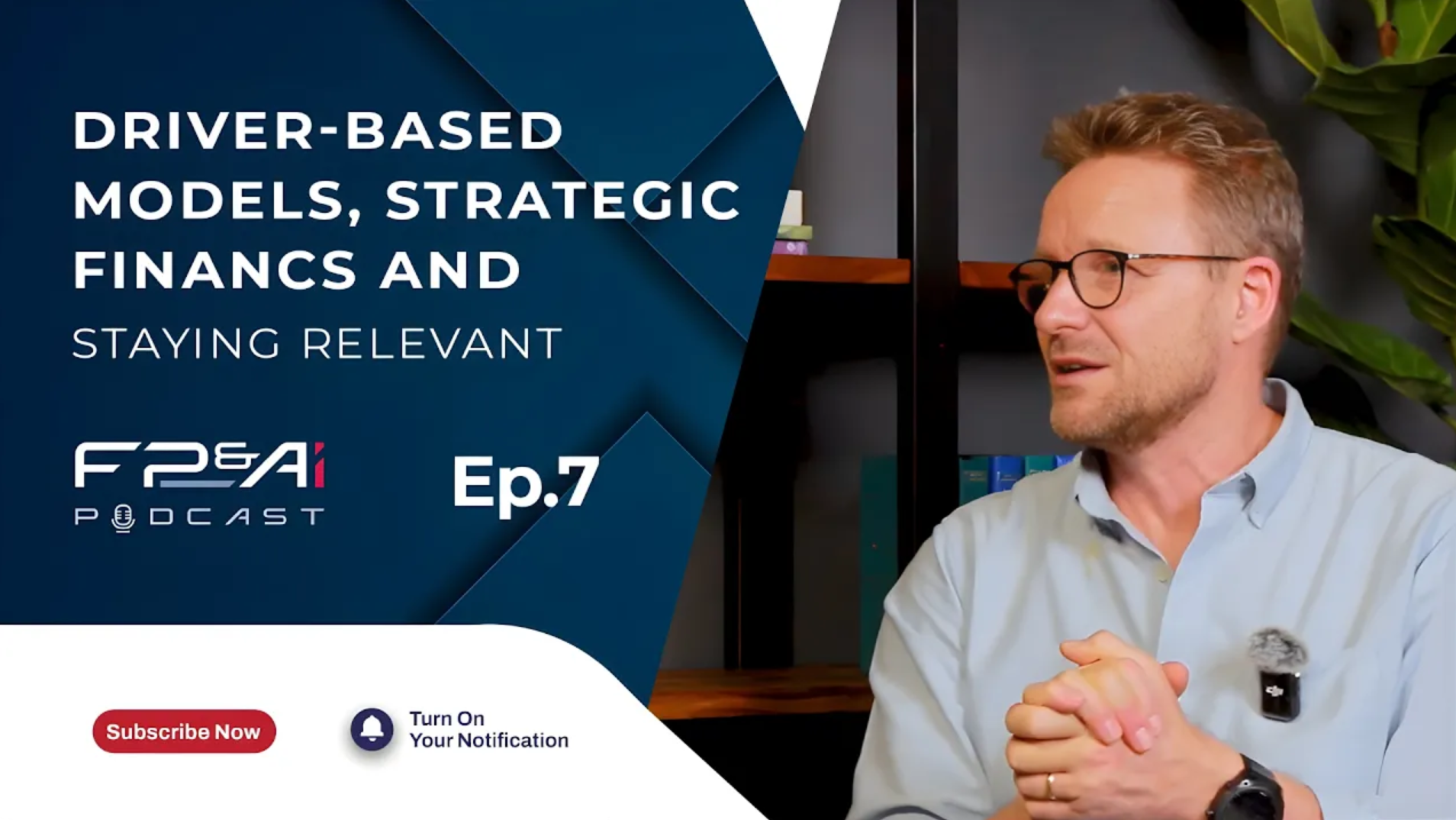
FP&Ai Podcast: Ep 7: Driver-Based Models, Strategic Finance, and Staying Relevant ft. Andrew Brown
Roger Knocker • May 27, 2026
Image with YouTube Link

In this episode of the FP&Ai Podcast, Roger Knocker and leadership coach Andrew Brown explore how AI is transforming the future of finance. They discuss generational shifts in work styles, the rapid adoption of AI among younger professionals, and how technology is changing the way finance teams communicate and operate.

[02:12-04:37] Generational Work Styles: The speakers discuss the shift toward asynchronous communication, particularly among younger professionals who prefer flexibility over traditional, live, synchronous meetings.


[04:37-05:28] The Evolving Finance Function: Knocker and Brown explore how younger, technically enabled professionals are moving away from the traditional role of "fancy bookkeepers" toward becoming strategic business enablers.


[06:58-08:46] AI in Finance: There is a consensus that while AI will automate much of the backward-looking, historical reporting tasks that currently consume a significant portion of a finance professional's time, it creates an opportunity for them to focus on innovation and growth.


06:24-06:58] The Importance of Mindset: The discussion emphasizes that the essential skill of the future is knowing how to instruct, coach, and verify AI tools rather than fearing them.


[13:01-14:50] Practical AI Application: Knocker shares a personal anecdote about using AI to draft 16 hours' worth of learning outcomes in just 60 minutes, illustrating the massive productivity gains available to those who actively embrace these technologies.


[17:13-17:47] Staying Relevant: Brown highlights that a growth mindset—characterized by curiosity and active experimentation—is vital for finance professionals to remain relevant.


[20:57-21:28] The conversation concludes with the message that while AI will not replace finance professionals, those who leverage these tools effectively will likely replace those who do not.
Team collaborating on financial planning and driver-based business strategy in a real office setting
By Roger Knocker May 28, 2026
Learn how integrated business planning and driver-based models improve financial planning accuracy, alignment, and decision making.
By Roger Knocker May 27, 2026
This podcast episode features host Roger Knocker in conversation with Yaseen Enos, a Chartered Accountant, focusing on the strategic implementation and role of Enterprise Performance Management (EPM) within modern finance departments. [0:33-2:21] Project-Based Workflows: Yaseen Enos explains that his daily professional life is primarily project-driven. Rather than focusing on maintenance, he aims to automate processes and systems, prioritizing high-value, innovative problem-solving that aligns with broader business goals identified by the CFO and senior leadership. [2:21-4:50] Practical Automation: The pair discusses a real-world example involving the automation of transaction data posting into the general ledger. By removing manual intervention, the goal is to improve accuracy and ensure that financial records remain perfectly synced with source systems. [6:47-11:20] Understanding Business Needs: Enos emphasizes the importance of spending time upfront to identify the 'true' underlying problem rather than simply executing a requested solution. He notes that users often suggest a specific tool as a solution, but deeper analysis is required to ensure the project actually addresses the correct business challenge. [12:01-13:16] The Mandate to Push Back: Enos highlights that he is empowered by an executive mandate to push back on projects that do not provide significant value or fail to meet the actual business needs, allowing him to better manage his team's workload. [14:06-16:41] The Case for EPM Tools: The discussion shifts to why companies eventually move away from spreadsheets like Excel and PowerBI. Enos suggests using a 'financial maturity model' to assess when a business has outgrown manual reporting; if a company struggles to deliver timely, accurate forecasts despite adding more staff, it is time to transition to an EPM solution. [19:16-21:38] Efficiency and Future-Proofing: They conclude that while Excel is a powerful tool, it becomes a bottleneck as business complexity and data volume grow. Implementing an EPM system is framed as an essential step for businesses looking to move beyond simple reporting toward agile, data-driven decision-making.
More Posts